

iC-NE SO8

iC-Haus
22-IC-NESO8
iC-NE SO8

Herst.:

Beschreibung:
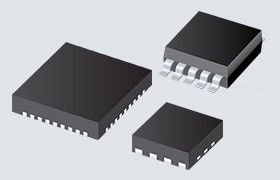
Driver ICs LED-Beleuchtungstreiber Light-Curtain Pulse Receiver

Lebenszyklus:
Neues Produkt:
Neu von diesem Hersteller.
ECAD Model:
Den kostenlosen Library Loader herunterladen, um diese Datei für Ihr ECAD Tool zu konvertieren. Weitere Infos zu ECAD-Modell.

Verfügbarkeit

Lagerbestand:
Nicht auf Lager
Lieferzeit ab Hersteller:
6 Wochen Geschätzte Produktionszeit des Werks.
Minimum: 1   Vielfache: 1
Stückpreis:
€ -,--
Erw. Preis:
€ -,--
Vorauss. Zolltarif:

Preis (EUR)

Menge Stückpreis
Erw. Preis
€ 5,68 € 5,68
€ 3,90 € 39,00
€ 3,64 € 91,00
€ 3,20 € 313,60
€ 3,04 € 893,76
€ 2,72 € 1 599,36
€ 2,30 € 2 479,40
€ 2,21 € 5 631,08

Produktattribut Attributwert Attribut auswählen
iC-Haus
Produktkategorie: Driver ICs LED-Beleuchtungstreiber
RoHS:  
1 Output
SOIC-8
5.5 V
4.5 V
300 kHz
2 V
iC-NE
0 C
+ 70 C
Tube
Marke: iC-Haus
Land der Bestückung: Not Available
Land der Verbreitung: Not Available
Ursprungsland: TH
Eingangsspannung: 4.5 V to 5.5 V
Montageart: SMD/SMT
Produkt: Light Grid Receiver
Produkt-Typ: LED Lighting Drivers
Verpackung ab Werk: 98
Unterkategorie: Driver ICs
Versorgungsstrom - Max.: 60 uA
Produkte gefunden:
Um ähnliche Produkte anzuzeigen, wählen Sie mindestens ein Kontrollkästchen aus
Um ähnliche Produkte in dieser Kategorie anzuzeigen, wählen Sie mindestens ein Kontrollkästchen oben aus.
Ausgewählte Attribute: 0

TARIC:
8542399000
USHTS:
8542399000

IS32LT3175N/P Single-Channel Linear LED Drivers

ISSI IS32LT3175N/P Single-Channel Linear LED Drivers come with fade in/out and PWM dimming. The regulators serve as a stand-alone LED driver-configurable from 20mA to 150mA with external resistors, no microcontroller is necessary. A logic level “courtesy light” signal from the PWM pin can be interfaced to precisely drive the LED channel. The IS32LT3175P obtains a positive polarity PWM signal. In addition, the IS32LT3175N obtains a negative polarity PWM signal. The regulator integrates a 63-step fade-in and fades out the algorithm (Gamma correction). This causes the output LED current to increasingly rise up to the full source value after the EN pin is pulsed.